2018 - 2024
University of Pisa
Physics studies at the University of Pisa, focused on theoretical physics, quantum field theory, lattice field theory, numerical methods, and scientific computing.
Curriculum vitae
Luca Ciucci
Software developer focused on systems programming, static analysis and scientific software
I develop systems and developer tools for technically demanding domains, with a focus on static analysis, safety-critical C and C++ software, Rust systems programming, AI-integrated developer tooling, scientific computing, and 3D reconstruction. My work combines low-level implementation, software architecture, domain-specific analysis, and structured interfaces that make complex technical data accessible to developers, command-line tools, and language models.
A practical mix of science, software, and hands-on engineering.
Scientific and technical foundations that shape how I approach engineering problems.
A broad toolkit, with current emphasis on systems, static analysis, and scientific software.
Software close to the machine, from desktop applications to constrained devices.
Applied numerical methods, geometry, and software engineering for real-world measurement systems.
Basic practical knowledge, mainly working with prebuilt boards, sensors, cameras, and embedded components.
Practical experience with manual tools, CNC machines, G-code, CAM, and 3D printing.
BUGSENG s.r.l.
Systems and developer-tools engineer focused on static analysis and scientific software
I contribute to ECLAIR, BUGSENG's static analysis platform for C and C++ software, used in contexts where correctness, maintainability, and compliance with safety-critical coding standards are important.
My work spans static-analysis-related development, developer tooling, automation, IDE and web integrations, and new product capabilities across a mixed technology stack. One recent project was a production Model Context Protocol (MCP) integration for ECLAIR, which I designed and delivered from prototype to release in roughly two weeks of part-time work. It enables AI clients and local language models to query diagnostics, source code, documentation, and report data through structured tools; I built the Rust implementation and end-to-end protocol tests.
The broader focus is on C and C++ static analysis and support for coding standards such as MISRA, AUTOSAR, and CERT, together with the infrastructure and workflows needed to make analysis results accessible and useful to developers.
Scanny3D s.r.l.
Software and algorithm development for 3D reconstruction.
Contributed to software and algorithm development for 3D scanning and reconstruction, combining acquisition workflows, calibration, reconstruction algorithms, and practical hardware integration with cameras, projectors, electronics, mechanics, and 3D printing.
The work involved both experimental prototyping and practical engineering.
embedded world Conference 2025 · WEKA FACHMEDIEN GmbH · pp. 343-364
Physics studies at the University of Pisa, focused on theoretical physics, quantum field theory, lattice field theory, numerical methods, and scientific computing.
Attended lessons on mechanics, physics laboratory, motorbike mechanical development, production, data analysis, and cooperative problem solving.
Attended physics courses with emphasis on classical and modern physics, including laboratory experiences in measurement and computing.
Attended courses on high-energy particle accelerator physics at the LNF INFN laboratories, with particular interest in accelerator technologies and tracking detectors.
English level B2.
Scientific high school diploma, applied sciences section, with a 100/100 score at T.C.O. Fermo.
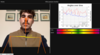
Built Body Tracking Web and the VDU posture monitor, a prototype system designed to help people improve their posture while working at a video terminal.
The project won the competition organized by Confindustria Marche and continued toward product-oriented development.

Winner of the ASML Intergalactic Coding Challenge 2019.
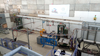
Two-week experience at CERN after winning the Beamline for Schools competition. We performed tests on the T9 beam facility with a Cherenkov detector proposed and built by our school team.
I was particularly involved in detector design, construction and testing, data analysis, and electronics.
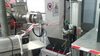
Performed experiments with the Cherenkov detector from the 2016 BL4S proposal on one of the Frascati INFN LINAC's beams at the BTF.
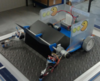
Participated with the "pac-man" project, for which I built most of the robot and all the firmware.
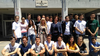
Participated in the first group of the school project proposing a Cherenkov-effect detector for the 2016 CERN Beamline for Schools competition.